
The checkride is the final step between you and your Private Pilot Certificate. After months of training, ground school, solo flights, and cross-country adventures, this is where you demonstrate to an FAA Designated Pilot Examiner (DPE) that you have the knowledge and skills to exercise the privileges of a private pilot safely and competently. This article covers everything you need to know to prepare for and pass your checkride.
What Is the Checkride?
The Private Pilot checkride is a two-part practical exam consisting of an oral examination and a flight test. It is conducted by a DPE — an experienced pilot authorized by the FAA to evaluate applicants. The checkride is based on the Airman Certification Standards (ACS), a detailed document published by the FAA that outlines every task, knowledge area, and skill you may be tested on. Your instructor should provide you with a copy of the ACS early in your training so you know exactly what is expected.
The checkride typically takes between three and five hours total, though this varies depending on the examiner and your performance. The examiner fee ranges from $600 to $900 and is paid directly to the DPE.
Prerequisites for the Checkride
Before you can schedule your checkride, you must have completed all FAA-required flight time and training, passed the FAA Private Pilot Knowledge Test (written exam), received an endorsement from your instructor certifying that you are prepared for the practical exam, and assembled the required documentation including your logbook, student pilot certificate, medical certificate, knowledge test results, and a current form of government-issued identification.
Your instructor will conduct a thorough review of your logbook to ensure all required endorsements and flight time minimums are met before signing you off for the checkride.
The Oral Examination
The oral exam is a structured conversation between you and the examiner. It is not a quiz with trick questions — it is a scenario-based discussion designed to evaluate your understanding of the knowledge areas defined in the ACS. Common topics include airworthiness requirements and aircraft documentation, weather analysis and interpretation of METARs, TAFs, and weather charts, airspace classifications, regulations, and flight restrictions, cross-country flight planning including navigation, fuel calculations, and weight and balance, aerodynamics and the principles of flight, aeromedical factors and personal minimums, and emergency procedures.
The examiner will typically ask you to plan a cross-country flight to a specific destination and use that scenario as a framework for the oral discussion. Prepare by studying the ACS knowledge areas, reviewing your ground school materials, and practicing explanations out loud. The goal is to demonstrate sound aeronautical knowledge and good judgment — not to memorize textbook definitions.
The Flight Test
If you pass the oral examination, you will proceed to the flight portion of the checkride. The examiner will evaluate your ability to perform the maneuvers and procedures outlined in the ACS, including preflight inspection and cockpit management, normal and crosswind takeoffs and landings, steep turns, slow flight, power-on and power-off stalls, ground reference maneuvers, navigation by pilotage and dead reckoning, use of navigation systems, emergency procedures such as simulated engine failure, basic instrument flight, and go-arounds and short-field or soft-field operations.
Throughout the flight, the examiner is evaluating not just your technical skill but also your situational awareness, risk management, and aeronautical decision-making. Fly the way your instructor taught you, communicate clearly, and stay ahead of the airplane. If you make a mistake, acknowledge it and correct it — examiners appreciate pilots who recognize and manage errors.
What Happens If You Do Not Pass
Not every applicant passes on the first attempt, and that is okay. If you receive a notice of disapproval, it will specify the areas where additional training is needed. You will work with your instructor to address those areas, receive a new endorsement, and reschedule the failed portion of the checkride. A disapproval is not the end of your journey — it is a learning experience that many successful pilots have been through.
After You Pass: Your Private Pilot Certificate
When you pass your checkride, the examiner will issue a temporary airman certificate on the spot. Your permanent Private Pilot Certificate will arrive by mail from the FAA within several weeks. Unlike many other certifications, a Private Pilot Certificate does not expire — though you will need to maintain medical currency and complete a flight review every 24 calendar months to exercise your privileges.
With your certificate in hand, you are authorized to fly as pilot in command of an aircraft, carry passengers, fly at night, and operate in a wide range of airspace. The freedom that comes with a Private Pilot Certificate is unlike anything else — and it is just the beginning of what aviation has to offer.
Congratulations and Welcome to Aviation
If you have followed this series from the beginning, you now have a complete roadmap from your very first steps as a prospective pilot all the way through your checkride. Earning a Private Pilot Certificate takes dedication, investment, and persistence — but the reward is a skill and a freedom that will stay with you for a lifetime. Blue skies and tailwinds from all of us at EntireFlight.
Checkride Essentials from EntireFlight
Make sure you are ready for your practical test with the right gear:
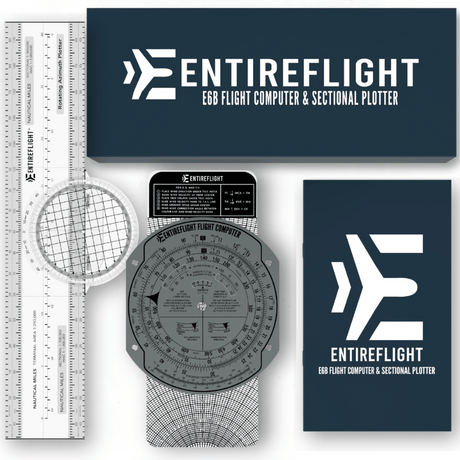
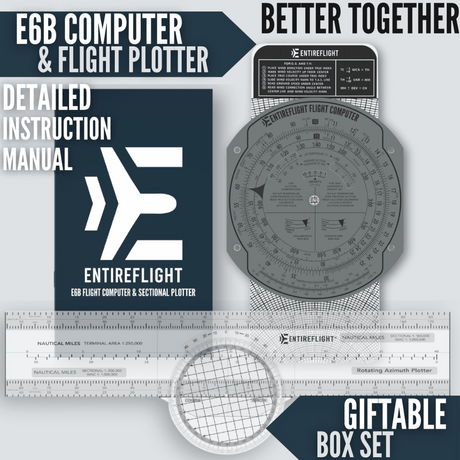
- E6B Flight Computer & Plotter Bundle — Many DPEs expect you to demonstrate manual E6B proficiency during the oral exam.
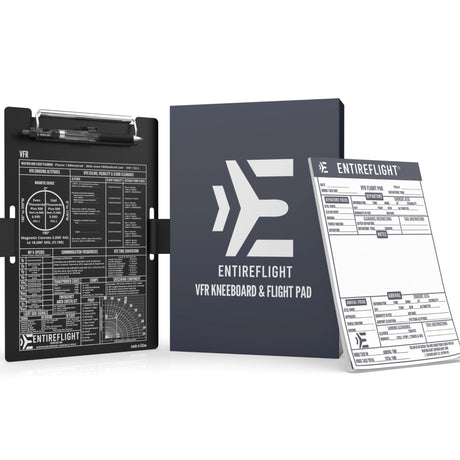
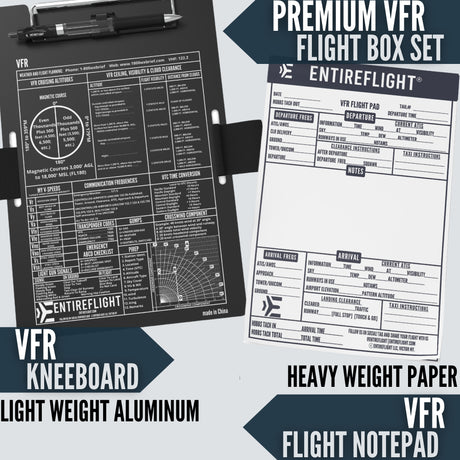
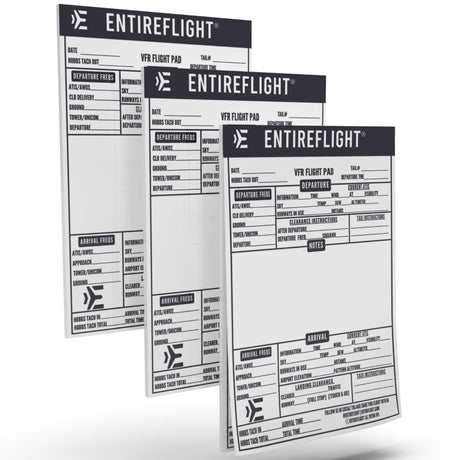
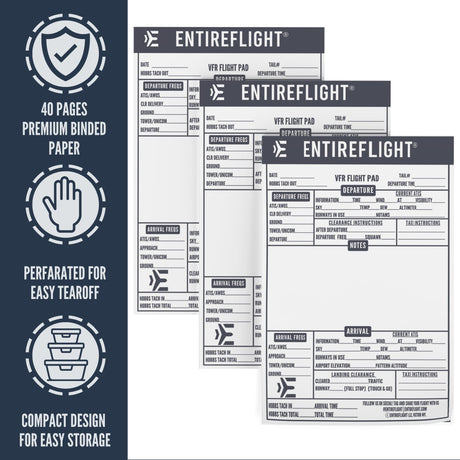
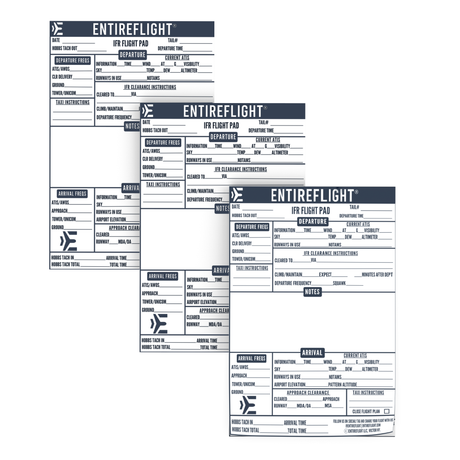
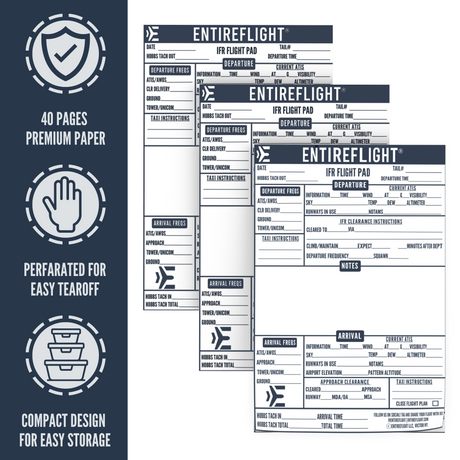
- VFR Kneeboard & Flight Pad — Show your DPE you have solid cockpit organization during the flight portion.
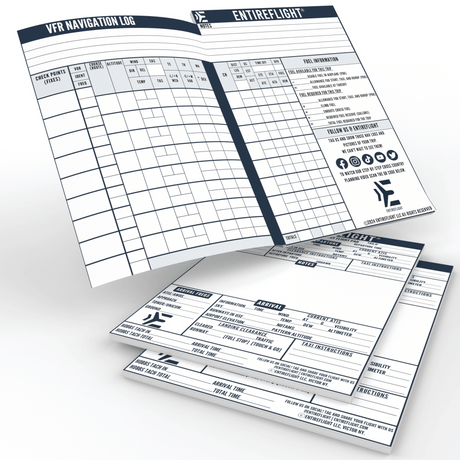
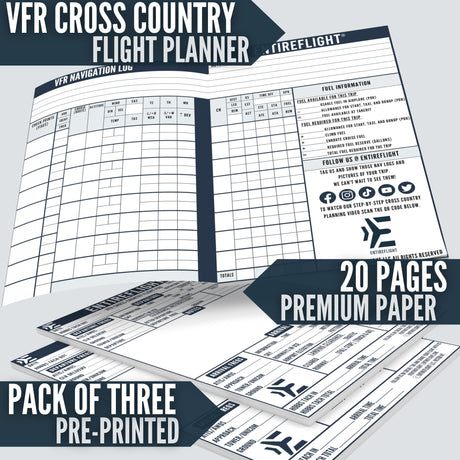
- Cross-Country Planning Flight Pad — Pre-printed fields for the cross-country planning your examiner will want to see.