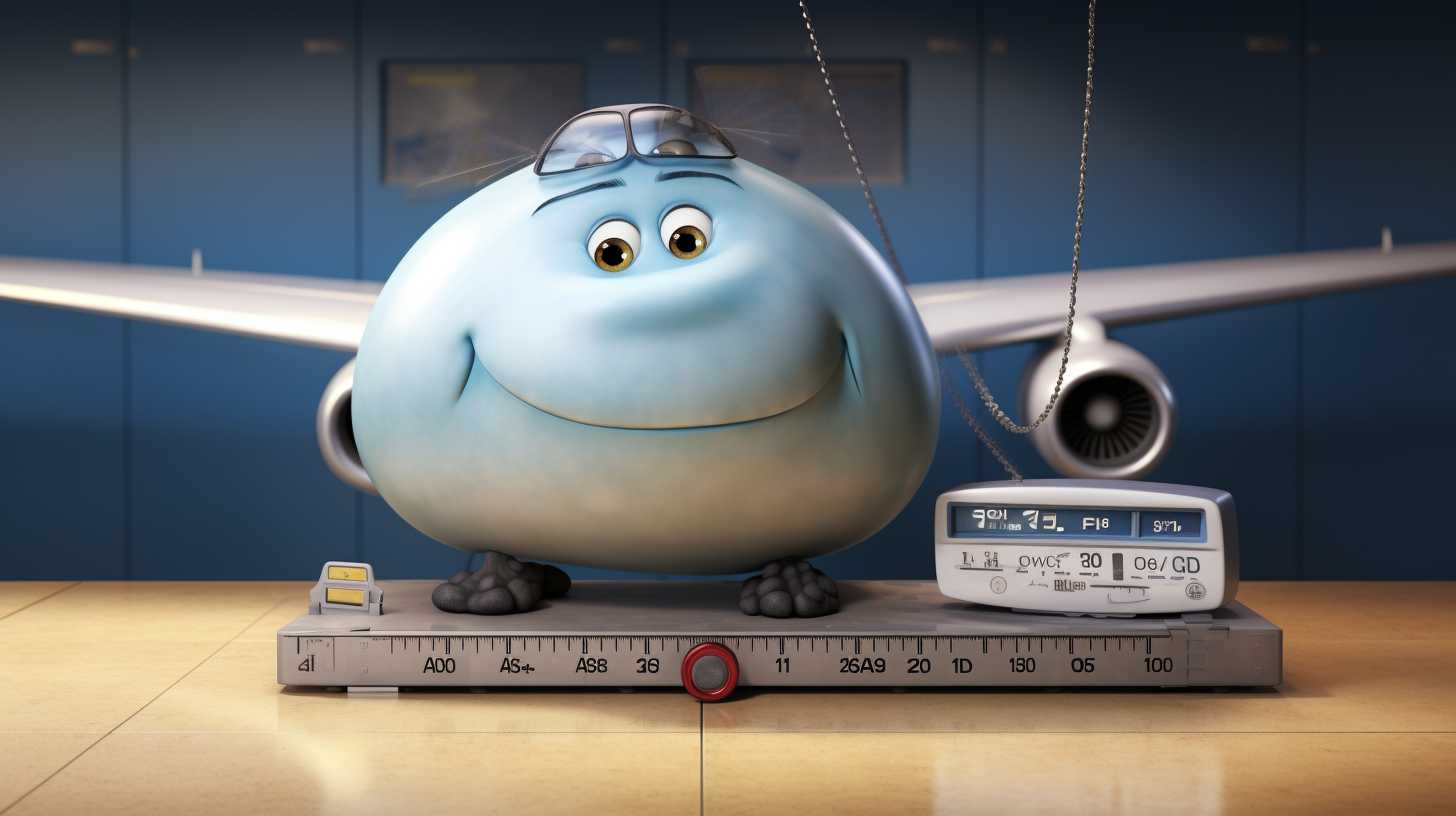
Airplanes weigh anywhere from about 1,100 lbs (500 kg) for a small single-engine trainer to over 1.2 million lbs (575,000 kg) for the largest commercial jets. The average single-engine airplane weighs roughly 2,400 lbs (1,089 kg), while a typical narrow-body airliner like the Boeing 737 weighs around 90,000 lbs (41,000 kg) empty and up to 182,000 lbs (82,600 kg) at maximum takeoff weight.
Below you will find detailed weight data for 20 of the most common aircraft, broken down by category, with weights listed in pounds, kilograms, and tons.
Quick Reference: How Much Do Common Airplanes Weigh?
| Aircraft | Type | Empty Weight (lbs) | Empty Weight (kg) | Max Takeoff Weight (lbs) | Max Takeoff Weight (kg) |
|---|---|---|---|---|---|
| Cessna 172 | Single-Engine | 1,680 | 762 | 2,550 | 1,157 |
| Piper PA-28 Cherokee | Single-Engine | 1,201 | 545 | 2,150 | 975 |
| Cirrus SR22 | Single-Engine | 2,250 | 1,021 | 3,600 | 1,633 |
| Beechcraft Baron 58 | Twin-Engine | 3,636 | 1,649 | 5,500 | 2,495 |
| Beechcraft King Air 350 | Turboprop | 9,075 | 4,116 | 15,000 | 6,804 |
| Cessna Citation CJ3+ | Light Jet | 8,740 | 3,964 | 13,870 | 6,291 |
| Embraer Phenom 300E | Light Jet | 7,507 | 3,405 | 12,570 | 5,702 |
| Bombardier Challenger 350 | Mid-Size Jet | 24,000 | 10,886 | 40,600 | 18,416 |
| Gulfstream G650 | Large Cabin Jet | 54,000 | 24,494 | 99,600 | 45,178 |
| Embraer E175 | Regional Jet | 49,383 | 22,400 | 85,517 | 38,790 |
| Boeing 737-800 | Narrow-Body | 91,300 | 41,413 | 174,200 | 79,016 |
| Airbus A320neo | Narrow-Body | 93,900 | 42,600 | 174,165 | 79,000 |
| Boeing 737 MAX 8 | Narrow-Body | 99,360 | 45,070 | 182,200 | 82,645 |
| Boeing 757-200 | Narrow-Body | 127,520 | 57,840 | 255,000 | 115,666 |
| Boeing 767-300ER | Wide-Body | 198,440 | 90,011 | 412,000 | 186,880 |
| Airbus A330-300 | Wide-Body | 264,554 | 120,000 | 513,677 | 233,000 |
| Boeing 777-300ER | Wide-Body | 370,000 | 167,829 | 775,000 | 351,534 |
| Boeing 787-9 Dreamliner | Wide-Body | 254,000 | 115,212 | 560,000 | 254,011 |
| Airbus A380 | Super Jumbo | 610,000 | 276,691 | 1,268,000 | 575,152 |
| Boeing 747-8 | Jumbo Jet | 485,300 | 220,128 | 987,000 | 447,696 |
How Much Does a Small Airplane Weigh?
Small airplanes, also called general aviation or light aircraft, are the planes you see at local airports used for flight training, personal travel, and recreation. A typical single-engine airplane like the Cessna 172 Skyhawk has an empty weight of about 1,680 lbs (762 kg) and a maximum takeoff weight of 2,550 lbs (1,157 kg). The Piper Cherokee weighs roughly 1,200 lbs (545 kg) empty.
High-performance single-engine planes like the Cirrus SR22 are heavier at 2,250 lbs (1,021 kg) empty, largely because of their built-in airframe parachute system and more powerful engine. Twin-engine piston planes like the Beechcraft Baron 58 come in around 3,636 lbs (1,649 kg) empty.
If you are a student pilot or private pilot flying these smaller aircraft, keeping track of weight and balance is one of the most important preflight calculations you will perform. Tools like a quality pilot kneeboard and E6B flight computer make these calculations much easier during flight planning.
How Much Does a Commercial Airplane Weigh?
Commercial airplanes are significantly heavier than private aircraft. Their weight depends on whether they are narrow-body (single-aisle) or wide-body (twin-aisle) aircraft.
Narrow-Body Airliners
Narrow-body jets are the most common commercial aircraft and serve short to medium-haul routes. The Boeing 737-800, one of the most popular airliners ever built, weighs 91,300 lbs (41,413 kg) empty and has a maximum takeoff weight of 174,200 lbs (79,016 kg). The Airbus A320neo, its main competitor, is very similar at 93,900 lbs (42,600 kg) empty. In tons, that is roughly 41 to 42 metric tons empty and about 79 metric tons at max takeoff weight.
Wide-Body Airliners
Wide-body jets are the long-haul workhorses of commercial aviation. The Boeing 777-300ER is one of the heaviest twin-engine jets in service, weighing 370,000 lbs (167,829 kg) empty and reaching a maximum takeoff weight of 775,000 lbs (351,534 kg), or about 352 metric tons. The Boeing 787-9 Dreamliner, built with advanced composite materials, is notably lighter at 254,000 lbs (115,212 kg) empty.
Jumbo Jets and Super Jumbos
The heaviest commercial airplane is the Airbus A380 super jumbo. It weighs a staggering 610,000 lbs (276,691 kg) empty and has a maximum takeoff weight of 1,268,000 lbs (575,152 kg), or about 575 metric tons. The Boeing 747-8, the latest variant of the iconic jumbo jet, weighs 485,300 lbs (220,128 kg) empty with a maximum takeoff weight of 987,000 lbs (447,696 kg).
Airplane Weight in Kilograms (kg)
Many pilots and aviation authorities outside the United States measure airplane weight in kilograms. Here is a quick conversion guide for common aircraft:
| Aircraft | Empty Weight (kg) | MTOW (kg) |
|---|---|---|
| Cessna 172 | 762 kg | 1,157 kg |
| Boeing 737-800 | 41,413 kg | 79,016 kg |
| Airbus A320neo | 42,600 kg | 79,000 kg |
| Boeing 777-300ER | 167,829 kg | 351,534 kg |
| Boeing 787-9 | 115,212 kg | 254,011 kg |
| Airbus A380 | 276,691 kg | 575,152 kg |
| Boeing 747-8 | 220,128 kg | 447,696 kg |
Airplane Weight in Tons
For those wondering how much a plane weighs in tons, here are the key figures. Note that these are metric tons (1 metric ton = 2,205 lbs or 1,000 kg):
| Aircraft | Empty Weight (metric tons) | MTOW (metric tons) |
|---|---|---|
| Cessna 172 | 0.76 | 1.16 |
| Boeing 737-800 | 41.4 | 79.0 |
| Airbus A320neo | 42.6 | 79.0 |
| Boeing 777-300ER | 167.8 | 351.5 |
| Boeing 787-9 | 115.2 | 254.0 |
| Airbus A380 | 276.7 | 575.2 |
| Boeing 747-8 | 220.1 | 447.7 |
What Affects an Airplane's Weight?
Several factors determine how much any given airplane weighs:
Airframe materials play the biggest role. Older aircraft made from aluminum alloys tend to be heavier, while modern planes like the Boeing 787 use carbon-fiber composite materials that reduce empty weight by as much as 20%.
Fuel load is a major variable. A fully fueled Boeing 777-300ER carries roughly 320,000 lbs (145,000 kg) of jet fuel, nearly doubling its empty weight. The amount of fuel loaded depends on the route distance, weather, and alternate airport requirements.
Passenger and cargo payload adds significant weight. The FAA uses standard passenger weights of 190 lbs (86 kg) per adult in summer and 195 lbs (88 kg) in winter (including carry-on bags). A 189-seat Boeing 737-800 carrying a full load of passengers and bags adds roughly 40,000 lbs (18,144 kg) to the aircraft weight.
Engine type and count also matters. Larger, more powerful engines weigh more. A single CFM LEAP-1B engine on a Boeing 737 MAX weighs about 6,128 lbs (2,780 kg), while a GE9X engine on the Boeing 777X weighs approximately 21,230 lbs (9,630 kg).
Understanding Key Airplane Weight Terms
Pilots and engineers use specific weight terminology that is important to understand:
Empty Weight (EW) is the weight of the airplane with no passengers, cargo, or usable fuel. It includes the airframe, engines, fixed equipment, hydraulic fluid, and unusable fuel.
Maximum Takeoff Weight (MTOW) is the heaviest an airplane is certified to weigh at the start of its takeoff roll. Exceeding MTOW is illegal and dangerous, as the aircraft may not be able to climb safely or stop on the runway in an emergency.
Maximum Landing Weight (MLW) is the heaviest weight at which an airplane can safely land. It is always lower than MTOW because the landing gear and airframe experience higher stress forces during landing. If an aircraft needs to land shortly after takeoff, pilots may need to dump fuel or circle to burn fuel down to MLW.
Maximum Zero Fuel Weight (MZFW) is the maximum weight of the airplane and its contents, minus usable fuel. This limit prevents excessive bending stress on the wings, since fuel stored in the wings actually helps counteract lift forces during flight.
Useful Load is the difference between maximum takeoff weight and empty weight. It represents the total weight of fuel, passengers, baggage, and cargo an airplane can carry.
For student pilots learning about weight and balance, having the right tools at hand makes a real difference. A pilot kneeboard keeps your weight and balance calculations, checklists, and notes organized and accessible during preflight and in the air.
Why Airplane Weight Matters
Weight management is critical for three main reasons:
Safety: An overweight airplane needs a longer runway to take off and land, climbs more slowly, and has reduced maneuverability. In an emergency, these margins can be the difference between a safe outcome and an accident. Every commercial flight has its weight calculated before departure, and flights are occasionally delayed or offloaded if they are over limits.
Fuel efficiency: Heavier airplanes burn more fuel. Airlines estimate that every additional 1,000 lbs of weight costs roughly $10,000 to $15,000 per year in extra fuel for a single aircraft. This is why airlines invest heavily in lightweight seats, thinner carpets, and even digital manuals instead of paper ones.
Performance: Weight directly affects how fast an airplane can fly, how high it can cruise, and how far it can travel. A Boeing 777-300ER at maximum weight might be limited to an initial cruise altitude of 31,000 feet, whereas the same plane at a lighter weight could climb directly to 39,000 feet where the air is thinner and fuel burn is lower.
How Is Airplane Weight Regulated?
Aviation authorities around the world set strict weight limits for every certified aircraft. In the United States, the Federal Aviation Administration (FAA) certifies the maximum takeoff weight, maximum landing weight, and maximum zero fuel weight for each aircraft type. These limits are published in the airplane's Type Certificate Data Sheet and its approved flight manual.
Internationally, the International Civil Aviation Organization (ICAO) sets standards that member countries adopt into their own regulations. The European Union Aviation Safety Agency (EASA) and other national authorities have similar certification requirements.
Airlines are required to weigh their aircraft periodically and maintain accurate weight records. Pilots must complete weight and balance calculations before every flight, and the aircraft must be within limits before it is cleared for departure.
Master Weight & Balance Calculations
Every pilot needs to calculate weight and balance before flight. The EntireFlight E6B Flight Computer & Sectional Plotter Bundle makes fuel burn, density altitude, and weight calculations fast and reliable. Pair it with our Cross-Country Planning Flight Pad for organized flight planning.
Shop Flight Planning ToolsFrequently Asked Questions
What is the weight of a Boeing 737 in tons?
A Boeing 737-800 weighs about 41 metric tons (91,300 lbs) empty. At maximum takeoff weight, it reaches approximately 79 metric tons (174,200 lbs). The newer Boeing 737 MAX 8 is slightly heavier at about 45 metric tons (99,360 lbs) empty with a maximum takeoff weight of 82.6 metric tons (182,200 lbs).
How much does the average passenger plane weigh?
The average narrow-body passenger plane (like a Boeing 737 or Airbus A320) weighs between 90,000 and 100,000 lbs (41,000 to 45,000 kg) empty. At maximum takeoff weight with passengers, fuel, and cargo, these planes weigh 170,000 to 182,000 lbs (77,000 to 83,000 kg).
How heavy is the heaviest airplane in the world?
The heaviest commercial airplane is the Airbus A380, with a maximum takeoff weight of 1,268,000 lbs (575,152 kg or 575 metric tons). The heaviest cargo airplane is the Antonov An-225 Mriya, which had a maximum takeoff weight of 1,410,958 lbs (640,000 kg or 640 metric tons), though it was destroyed in 2022.
How much does an airplane weigh in kg?
It depends on the airplane type. A small Cessna 172 weighs 762 kg empty, a Boeing 737-800 weighs 41,413 kg empty, a Boeing 777-300ER weighs 167,829 kg empty, and an Airbus A380 weighs 276,691 kg empty.
How much does airplane fuel weigh?
Jet fuel (Jet-A) weighs approximately 6.7 lbs per gallon (0.8 kg per liter). A Boeing 737-800 carries up to 6,875 gallons (26,025 liters) of fuel weighing about 46,063 lbs (20,894 kg). A Boeing 777-300ER can carry up to 47,890 gallons (181,283 liters) weighing roughly 320,863 lbs (145,538 kg).
How much does a fighter jet weigh?
Fighter jets vary widely in weight. An F-16 Fighting Falcon weighs about 19,700 lbs (8,936 kg) empty, while an F-15 Eagle weighs about 28,000 lbs (12,700 kg) empty. The F-22 Raptor weighs approximately 43,340 lbs (19,700 kg) empty, and the F-35 Lightning II weighs roughly 29,300 lbs (13,290 kg) empty.